
24/7 Online
301-622-5360
 By
Nicole
By
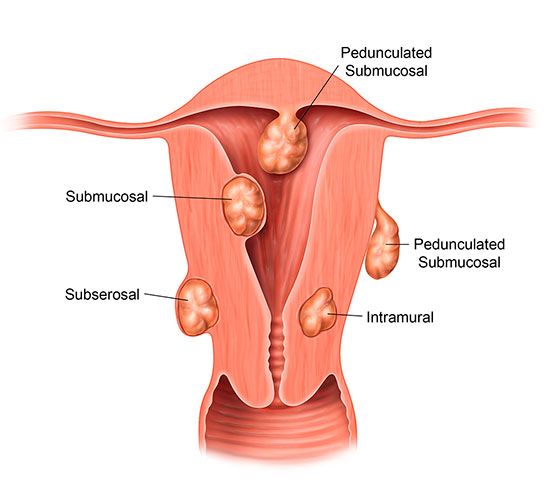
NicoleFibroids are diagnosed by type, based on their position within the uterine wall, and are typically divided into four categories. These categories are:
Though these names may be somewhat challenging to pronounce, they are fortunately fairly easy to explain.
Let’s start with Subserosal Fibroids.
The next fibroid type is Submucosal Fibroids.
Another fibroid type is Intramural Fibroids.
The last type of fibroids is Pedunculated Fibroids.
The classification of fibroids is somewhat limited, in that most fibroids are big enough or numerable enough to fall into several categories. However, identifying the type of fibroids can help in the diagnosis and treatment of them. If these fibroids are significant, like in the case of a large intramural fibroid with a significant part of it being submucosal, sometimes the solution is a hysterectomy. For women of childbearing age that want to conceive, an option for them is a myomectomy. This surgical operation can remove fibroids while preserving the uterus.
One of the best options out there for fibroid removal is Uterine Fibroid Embolization. Unlike the other treatment options available, UFE targets all of the fibroids in the uterus, making it effective for women with multiple fibroids, regardless of the fibroid’s size.
The bottom line is if you are experiencing symptoms that could be related to having uterine fibroids, help is available.
The first step is to make an appointment with your doctor. Your doctor can then order an ultrasound to find out where the fibroid or fibroids are located, and what type of fibroid it is.
6915 Laurel Bowie Rd. Suite 101 Bowie, MD 20715
Book An Appointment6915 Laurel Bowie Rd. Suite 101 Bowie, MD 20715
Book An Appointment6915 Laurel Bowie Rd. Suite 101 Bowie, MD 20715
Book An AppointmentYou can also call 301-622-5360 to book an appointment