
Categories
Enlarged Prostate

The Prostate and Urinary Issues

Many men experience urinary symptoms due to an enlarged prostate, however, many of these men are unaware as to why that is.

In fact, the most common symptoms of an enlarged prostate are urinary issues. These include, but are not limited to frequent urination, having a hard time getting started, having a weak urine stream, peeing in starts and stops, and dribbling when finished.

So why is this?

The answer is- location, location, location.

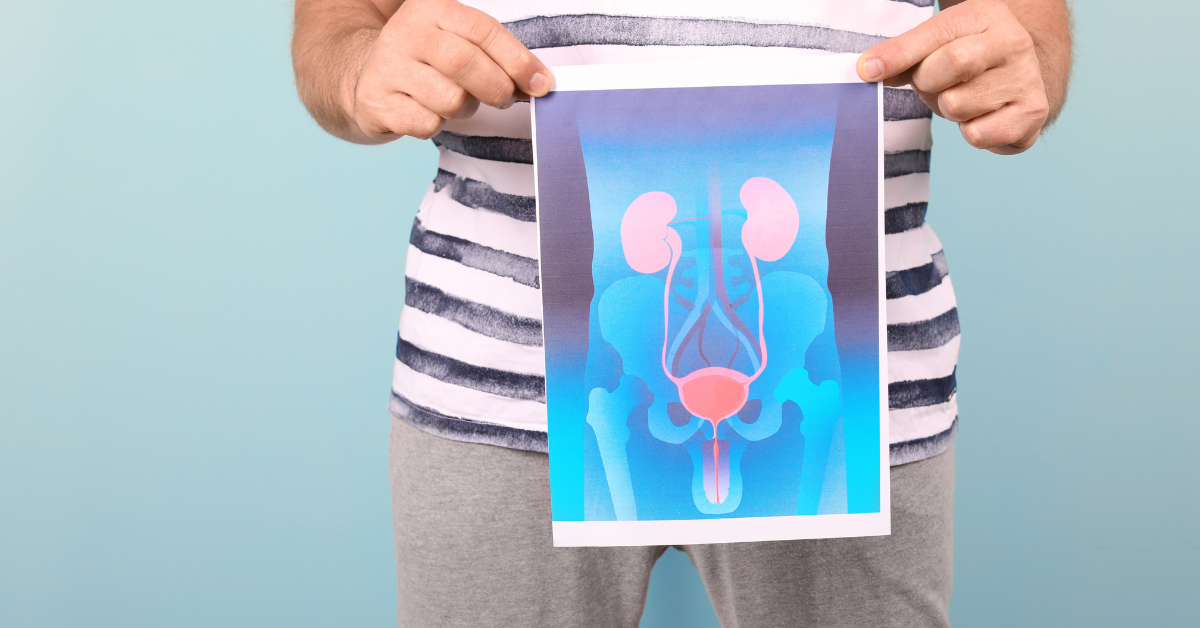
The prostate is located below the bladder, in front of the rectum, and surrounds part of the urethra. Due to this location, any excessive growth of the prostate can cause issues with urination.

Sometimes these issues are mild, and just a natural part of aging- while other times these issues are more problematic and can only be resolved through treatment.

The problem is, that when the prostate grows too large, it can literally squeeze the urethra, thus causing the bladder to have to work even harder to pass urine.

This squeezing of the urethra, over time, can cause the bladder muscles to become weak, making it harder for it to be emptied. It can also lead to several other troubling symptoms such as:

  • Feeling like you still have to pee even after you just went
  • Having to go too often — eight or more times a day
  • Incontinence (when you don’t have control over when you pee)
  • An urgent need to pee, all of a sudden
  • You wake up several times a night to pee
  • Urinary tract infections, bleeding, bladder damage, and bladder stones

In order to treat urinary issues caused by an enlarged prostate, many men will turn to medication to help reduce these symptoms.

Some of the most commonly used medications are:

  • Alpha-blockers:
    Such as tamsulosin (Flomax) or terazosin (Hytrin).
    These medicines are used to relax muscle tissue
  • 5-Alpha reductase inhibitors:
    Such as dutasteride (Avodart) and finasteride (Proscar).
    These medications are used to shrink the prostate.

Alpha-Blockers are a type of blood pressure medication, that work by “blocking” the hormone norepinephrine (also known as noradrenaline) and thereby prevent the muscles in the walls of veins and smaller arteries from constricting.

Due to their ability to relax the muscles in the prostate and around the bladder, alpha-blockers are often prescribed to help reduce the urinary issues caused by an enlarged prostate.

In clinical studies, alpha-blockers have shown promising results in their ability to improve urinary symptoms related to BPH, and have proven to do so faster than another commonly prescribed medication for BPH, which is 5-alpha reductase inhibitors.

Both normal and abnormal prostate growth is driven by 5-alpha reductase which aids in the formation of dihydrotestosterone, also known as DHT, which is an androgen formed from testosterone.

Administering a 5-Alpha Reductase Inhibitor, such as finasteride or dutasteride, can inhibit the production of DHT and result in a decrease in prostate volume. By decreasing the size of the prostate, prostate symptoms such as urinary issues are also decreased.

However, both alpha-blockers and 5-alpha reductase inhibitors come with their fair share of side effects and risks.

In our next article, we will take a look at some of these potential risks, as well as explore some alternatives to medication, such as an extremely effective non-invasive procedure, Prostate Artery Embolization.


Categories
Enlarged Prostate

PAE and Sexual Function

Prostate artery embolization does not carry the same risk of sexual dysfunction as other treatment methods for an enlarged prostate.

Prostate surgeries such as transurethral resection of the prostate, also known as TURP, can result in damage to the nerves and muscles surrounding the bladder. This, in turn, can result in a condition where during ejaculation, the semen flows backward into the bladder.

This backward flow of semen is known as retrograde ejaculation, which is estimated to affect as many as 65-75% of men following the TURP procedure.

So does prostate artery embolization carry any risk of sexual problems?

Of course, there are many factors that can contribute to erectile problems and sexual dysfunction, but the procedure of prostate artery embolization usually is not one of them.

A study published in the International Journal of Clinical Practice, called “Sexual and functional outcomes of prostate artery embolization: A prospective long-term follow-up, large cohort study” took a further look at the effect that prostate artery embolization can have on sexual function.

This particular study involved 147 patients with a mean age 72.5 years, that were treated with PAE.

The researchers followed up with each patient 12 months after the PAE procedure and measured their International Prostate Symptom Score (IPSS), IPSS quality of life (QoL), prostate volume determination, and Sexual Health Inventory for Men (SHIM). They also accessed ejaculatory function and medication utilization.

The data from the 12-month follow-up showed that the mean IPSS and QoL scores significantly decreased, and all the objective parameters (mean Qmax, PVR, and prostate volume) reported a significant improvement.

Not only that, but at 12 months antegrade ejaculation was preserved, and they even reported a slight improvement in IIEF scores (International Index of Erectile Function).

126 of the patients were also followed up with 18 months after PAE, and it reported significant improvement of all the variables evaluated (even for PSA values and IIEF scores). No major complications occurred.

Another study, published in The Journal of Sexual Medicine reviewed the records of 83 consecutive patients undergoing PAE.

Multidisciplinary follow-ups included the same measurements taken during the previous study such as IPSS, QoL, and IIEF scores.

The results of their research determined that of the 83 patients, none of them developed retrograde ejaculation. They also found that for those taking medication prior to PAE, many no longer needed it.

The study concluded that

“PAE represents a novel treatment strategy for symptomatic BPH that significantly reduces symptom burden, prostate volume, quality of life, and medication utilization. As our data suggest, PAE may actually improve sexual function for many patients.”

Not only does PAE have the advantage over TURP, in that it is associated with a decreased risk of urinary complications and sexual side effects such as retrograde ejaculation and erectile dysfunction, but it has even more advantages as well.

These advantages, include, but are not limited to: PAE requires no hospitalization, no general anesthesia, and a much faster recovery period than prostate surgery.

To find out if PAE could help you, please call and set up a consultation today.

Categories
Enlarged Prostate

PAE and Improvement in Sexual Function

Studies have found that treating benign prostate hyperplasia with prostate artery embolization can improve erectile function.

One of the studies that found this to be true, appeared in the Journal of Vascular and Interventional Radiology.  The researchers conducting the study followed 53 consecutive patients both before and after their prostate artery embolization procedure.

What they found was that over 60% of the patients experienced an improvement in erectile function by their 3-month follow-up post-PAE. They also found that none of the patients that took part in the study experienced ejaculatory dysfunction.

The same can’t be said for another common treatment for benign prostate hyperplasia, called transurethral resection of the prostate, also known as TURP.

In recent years, TURP,  which was once the standard for BPH surgery, has become a less favorable treatment option due to its risk of sexual side effects and other complications. In fact, it is not uncommon for TURP surgeries to result in damage to the nerves or muscles surrounding the neck of the bladder.

When the muscles or nerves surrounding the neck of the bladder are damaged, semen no longer travels out of the body through the urethra. Instead, semen flows backward into the bladder during ejaculation.

This backward flow of semen is referred to as retrograde ejaculation, which is estimated to affect as many as 65-75% of men following the TURP procedure.

It is also important to point out that some estimates suggest that up to 10% of men who undergo the TURP procedure experience erectile dysfunction.

Erectile dysfunction is defined as when a man has difficulty getting and maintaining an erection.

Though for some, this problem is temporary and only happens during the post-TURP recovery period, while for others, it can be a permanent condition.

Fortunately, prostate artery embolization does not carry these same risks– A fact that is backed up by several more research studies. This includes, but is not limited to, a study published in the International Journal of Clinical Practice.

In our next article, we will take a look at the results of that study.

Categories
Enlarged Prostate

Avoiding Sexual Side Effects Through PAE

Surgical treatments for benign prostate hyperplasia, such as TURP can result in significant adverse sexual effects, while prostate artery embolization, does not carry this same risk.

TURP can result in a condition known as retrograde ejaculation.

Some research studies have estimated that 65-75% of men have retrograde ejaculation post-TURP. While other studies, such as this one, estimate that as many as 70-90% of men experience this condition.

Though typically retrograde ejaculation isn’t harmful per se, it is a condition that can result in decreased sexual pleasure and fertility issues.

Prostate Artery Embolization, on the other hand, is associated with little to no sexual side effects.

In fact, some studies have found statistically significant data showing that PAE can actually lead to an improvement in erectile function, such as this one which found an overall improvement in sexual function by 34 percent for the patients, within the first-month post-PAE.

Another study, which was published in The Journal of Sexual Medicine also sought to uncover the impact that prostate artery embolization can have on erectile function.

In the study, researchers looked at 167 patients that underwent PAE and collected data including the Sexual Health Inventory, and other health measurements. The patients were followed up with post-PAE at 3, 6, and 12 months.

What they found was that prostate artery embolization had no adverse effect on erectile function in the majority of patients at 3 months after the procedure, and the number continued to go down at 6 and 12 months.

Though there were still cases of ED, in some of the patients, this was not purported to be directly caused by the procedure and could be due to other complications including preexisting conditions and complications from other procedures such as TURP.

There are also several studies that found Prostate artery embolization to be associated with statistically significant improvement in erectile function.

In our next article, we will take a look at some of these studies.

In the meantime, if you are suffering from the symptoms of benign prostate hyperplasia, and are worried about treatments that could have a negative impact on your sexual health, there are options available.

To set up a consultation in order to find out if prostate artery embolization could benefit you, please call us today at 301-622-5360 or reach out to us through our website.

Categories
Enlarged Prostate

Sexual Function or Dysfunction

Some treatment methods for benign prostate hyperplasia carry the risk of causing sexual dysfunction. However, not all treatment methods carry this same risk.

One of the most common and longest-running treatment methods for BPH is transurethral resection of the prostate, also known as TURP. While another, the newer method has been increasing in popularity, called prostate artery embolization, or PAE.

Though both of these treatment methods are effective in relieving the symptoms associated with an enlarged prostate, TURP carries a higher risk of sexual dysfunction.

In fact, while prostate artery embolization has been shown to actually improve erectile function following the procedure, TURP can come with long-term sexual complications some of which can be permanent.

The most common erectile complication that affects as many as 65-75% of men following the TURP procedure, is something known as “retrograde ejaculation”.

Retrograde ejaculation is caused by damage to the nerves or muscles surrounding the neck of the bladder, which can happen during prostate surgeries such as TURP.

When these muscles or nerves are damaged, semen no longer travels out of the body through the urethra, but rather it flows back into the bladder during ejaculation.

Though retrograde ejaculation can make an orgasm less pleasurable for men, it isn’t necessarily harmful. Except when it comes to fertility.

Due to the backward flow of semen, retrograde ejaculation can interfere with a man’s ability to get a woman pregnant.

Though there are other ways to achieve a pregnancy, such as fertility treatments, those methods can be incredibly expensive and are not an option for everyone.

Therefore, for men that are interested in having children the natural way, the TURP complication of retrograde ejaculation is problematic.

It is also important to point out that some estimates suggest that up to 10% of men who undergo the TURP procedure experience erectile dysfunction. Erectile dysfunction is defined as when a man has difficulty getting and maintaining an erection (erectile dysfunction).

Though sometimes this problem is temporary and only happens during the recovery period, for some, it can be a permanent condition.

Fortunately, there are other procedures to treat BPH that do not carry the same risk for sexual dysfunction and erectile issues. In our next article,  we will look at the effect that PAE can have on sexual function.

Categories
Enlarged Prostate

TURP or PAE?

Today we will continue looking at a surgical method to treat benign prostate hyperplasia ( BPH) that has been around for a very long time called transurethral resection of the prostate (TURP).

We will also compare some of the risks it carries with that of a more recent and extremely effective procedure for BPH called prostate artery embolization ( PAE).

So which is better TURP or PAE? What are the benefits? The side effects? And the risks?

One of the benefits of treating benign prostate hyperplasia through the surgical procedure, transurethral resection of the prostate( TURP), is that it has been around for a long time.

The procedure has stood the test of time, and the results of it have been known to have long-term outcomes, with its effects sometimes lasting as long as 15 years or more.

Another benefit of TURP is that like Prostate Artery Embolization, TURP doesn’t involve any incisions.

However, TURP is very different that PAE.

Prostate Artery Embolization is an outpatient procedure performed by an interventional radiologist.

PAE begins with the insertion of a tiny catheter that is threaded through the blood vessels until it reaches the artery that supplies blood to the prostate.

Once in place, tiny beads are sent through the catheter and are released into the artery. These particles then create a blockage that decreases the blood flow to the prostate in order to stop its growth.

While TURP, is also non-invasive in that it is not an open surgery, it is still a surgery nonetheless and is quite different than PAE.

TURP is a surgery that involves an instrument called a resectoscope, which is inserted through the tip of the penis and into the urethra. Then, using an electrical current, pieces of the prostate are removed.

Unlike PAE which is a same-day procedure, TURP usually involves a hospital stay and has a much longer recovery time.

Another key difference between the TURP procedure and PAE is the specific set of side effects and risks that come with either procedure.

One area in which they differ greatly is the effect that the procedure can have on erectile function.

While one method carries a risk of retrograde ejaculation and erectile dysfunction, the other carries no risk of retrograde ejaculation, and can actually improve erectile function.

In our next article, we will dive deeper into the effect that TURP and PAE have on erectile function or dysfunction.

Categories
Enlarged Prostate

When Prostate Surgery Fails

When it comes to surgical procedures of any kind, there is always a risk that things won’t work out. When surgery fails or leads to side effects and complications that are permanent, the reality can be devastating.

Therefore, when it comes to deciding which treatment method is best for treating your benign prostate hyperplasia, it’s important to be aware of the potential side effects and risks that come with each method.

One of the most common procedures to treat a symptomatic enlarged prostate is the transurethral resection of the prostate, also known as TURP.

TURP is a procedure that involves removing prostate tissues through the urethra, in order to allow urine and other bodily fluids to pass more easily.

Though the most common side effects, like experiencing some post-op blood in your urine, will pass with time. Other side effects and undesirable outcomes might not.

Not every prostate procedure is guaranteed to cure the issue it is aiming to treat. And, TURP is no exception to this.

First of all, sometimes the TURP surgery will not relieve all of your symptoms, such as urinary symptoms that might not change or be entirely cured.

You might be wondering- How is that possible, given that during the surgery the blockage was cleared?

The urinary issues may be continuing due to urethral strictures.

Urethral strictures are caused by scarring that can occur after TURP, both in and around the urinary tract. This scarring can actually cause further blockage to urine flow. And as a result, another surgery may be required.

Some patients also experience urinary incontinence following the TURP procedure. This can happen due to continuing bladder problems or even sphincter muscle damage.

Another concern for men undergoing transurethral resection of the prostate in order to treat benign prostate hyperplasia is the risk of having erectile issues following the procedure.

Erectile dysfunction is a potential risk that comes with just about any prostate surgery, and can usually be treated with medication. However, it’s important to keep in mind that these medications also come with their own set of side effects and risks.

Fortunately, there are other treatment methods for an enlarged prostate that have a much lower risk of experiencing these unwanted outcomes, especially in regard to sexual function.

In fact, Prostate Artery Embolization has been shown to actually improve erectile function following the procedure. And it comes without the risk of retrograde ejaculation, which is the most common long-term complication following the TURP procedure, affecting as many as 65 to 75% of men.

In our next article, we will take a look at this unfortunate potential complication from TURP.

Categories
Enlarged Prostate

Weighing the Pros and Cons of Each Procedure

When it comes to seeking treatment for benign prostatic hyperplasia, it’s important to consider the pros and cons of each treatment approach, as well as the benefits and risks.

Being aware of the benefits, as well as the potential risks and complications of each treatment or procedure, can be of great help when working with your doctor to determine which is best for you. Taking into account not only the benefits and risks but also looking at how each procedure fits with your individual lifestyle and prostate condition.

Today we will start by looking at the treatment method that for most of the 20th century, roughly from 1909 until the late 1990s, has been the premier treatment for symptomatic benign prostatic hyperplasia. That treatment method is transurethral resection of the prostate (TURP).

TURP became famous among the treatment methods for BPH when it became the first successful, minimally invasive surgical procedure of the modern era. And, to this day, it remains a standard therapy for obstructive prostatic hypertrophy and is often the surgical treatment of choice when other methods fail.

However, as more medications and non-invasive non-surgical procedures have become available, such as prostate artery embolization, the need for a surgical intervention like TURP has been reduced substantially.

That being said, TURP continues to be performed due to its effectiveness in treating and relieving the symptoms of an enlarged prostate. But as with all surgeries, it does come with its own set of possible risks and unwanted side effects that should be taken into consideration.

So let’s take a look at what those are.

A successful TURP procedure involves removing prostate tissue through the urethra, thus allowing urine and other bodily fluids to pass through more easily.

TURP is a serious surgery that involved anesthesia and the use of a catheter during and post-operation, as well as a recovery that includes a hospital stay.

The most common side effects experienced by men after the TURP procedures are:

Swelling in the urethra, penis, and lower abdominal area.

This swelling can cause these areas to be tender, red, and swollen for several weeks after the surgery, and can cause problems with urination.

Another common side effect is feeling weak and tired easily. This side effect can last for several weeks as the body recovers from the operation.

Other common side effects of TURP surgeries include but are not limited to:

  • bleeding after the operation – this usually reduces over time and should stop after four weeks
  • difficulty completely emptying the bladder
  • urinary incontinence or leakage
  • urinary urgency or the sudden urge to urinate
  • discomfort during urination
  • small dribbles or clots of blood in the urine, for up to 6 weeks

Another potential side effect of the TURP procedure is something called retrograde ejaculation, which is the result of semen flowing backward into the bladder during ejaculation.

Though retrograde ejaculation isn’t necessarily harmful, it can cause potential complications such as male infertility and can make the male orgasm less pleasurable.

In our next article, we will take a look at some of the rare, but possible risks associated with the TURP procedure, and then we will move on to looking at the benefits and risks of other popular procedures to treat a symptomatic enlarged prostate.

In the meantime, if you are interested in learning more about a state-of-the-art non-invasive treatment that could be an option for you, please contact our office today to set up a consultation and learn more about Prostate Artery Embolization.


Categories
Enlarged Prostate

The Connection Between Prostate Health and Sexual Pleasure

It’s safe to say that every type of surgery comes with its own set of possible side effects and risks. However, when it comes to prostate surgery, any error or adverse reaction could have dire consequences when it comes to fertility and sexual health.

Though the primary function of the prostate is that it produces some of the seminal fluid that transports sperm, that is not all it does.

The prostate contains nerves, blood vessels, and muscles that not only help push semen through the urethra during ejaculation but are also a critical part of getting and maintaining an erection.

The nerves and blood vessels that run along each side of the prostate are called the neurovascular bundle. The neurovascular bundle also plays an important role in controlling urine flow, and as a result, it can help protect against urinary tract infections.

Of course, the prostate is of significant importance in order to have a healthy functioning reproductive system, bladder, urinary tract, and so forth. But it’s also a very important part of a healthy and enjoyable sex life.

Given the many nerve endings in the prostate, the prostate is a rather sensitive area- a sensitivity that greatly lends itself to increased sexual satisfaction.

Due to its sensitivity, this area of the male body can be a sexual pleasure center, commonly referred to as the “G-spot.”

The G-spot, the sensitivity of the prostate, and its role in sexual pleasure have, in recent years, led to the sale of sexual aids such as prostate massagers. Sales of which, have been on the rise.

According to data from the pleasure product company HealthyAndActive, prostate massager sales have increased by 56% over the past five years, particularly among straight men over the age of 45.

However, when it comes to treating benign prostate hyperplasia, also known as an enlarged prostate, some of the treatment methods available come with an increased risk of damaging this sensitive area of the male sex organs.

This potential nerve damage can greatly reduce the sensitivity of the prostate, as well as deter it from functioning properly.

Therefore, in order to protect the functionality of the prostate, it’s important to consider all of the treatment methods available for BPH, as some procedures come with higher risks of adverse effects than others.

In our next article, we will look at the possible adverse effects associated with one of the most common prostate surgeries transurethral resection of the prostate (TURP), and compare them to the risks of a non-invasive procedure like prostate artery embolization.

Categories
Enlarged Prostate

TURP: Side Effects and Recovery Period

Prostate surgery, specifically the transurethral resection of the prostate (TURP) is an effective and sometimes long-lasting procedure for men with benign prostatic hyperplasia. However, it does come with its own set of side effects, as well as a much longer recovery period than a non-invasive procedure such as prostate artery embolization.

Transurethral resection of the prostate (TURP) is a surgical procedure that involves cutting away a section of the prostate.

The procedure is performed by using a device called a resectoscope, which is a thin metal tube containing a light, a camera, and a loop of wire.

During the procedure, which requires the use of general or spinal anesthesia to prevent any pain, the resectoscope is entered into the penis and passes along the urethra until it reaches the prostate.

Once the instrument has reached the prostate, the loop of wire on it is then heated with an electric current and is used to cut away the section of the prostate that is causing BPH symptoms.

Following this, a thin tube called a catheter is then inserted into the urethra to pump fluid into the bladder and flush away pieces of the prostate that have been removed.

The TURP procedure usually necessitates a hospital stay for one to three days following the operation.

During this time the catheter used during the operation will be left in place throughout the duration of the hospital stay because post-op the urethra will be swollen which can hinder the ability to urinate normally.

Following the procedure, many men experience difficulties urinating, as well as blood in their urine. They also report feeling tired and under the weather for at least a week or two after the procedure. However, for some men, these issues can last upwards of 4 to 8 weeks.

During the 4 to 8 weeks, most patients are advised to stay off work and avoid lifting heavy objects, doing strenuous exercise, driving, and having sex during this time.

The most common side effect following the TURP procedure is inflammation in the urethra and surrounding area.

This swelling and inflammation can cause difficulty urinating, which sometimes requires the catheter to stay in longer.

This, however, can also be problematic since the catheter can not only be uncomfortable and cause bladder cramping- but it can also come with its own health risks such as an increased risk for urinary tract infections and other infections as well.

Some of the other common side effects of TURP surgeries include, but are not limited to:

  • difficulty completely emptying the bladder
  • urinary incontinence or leakage
  • urinary urgency or the sudden urge to urinate
  • discomfort during urination
  • small dribbles or clots of blood in the urine, for up to 6 weeks
  • erectile difficulty
  • decreases in semen produced during ejaculation

These common side effects usually go away with rest and time, as the urethra and prostate tissues become less inflamed, usually within a few weeks. However, in some cases, they might not.

In fact, as with all surgeries, TURP does come with its own set of serious risks and complications.

In our next article, we will take a look at some of the serious risks and complications associated with transurethral resection of the prostate, and look at some of the alternative procedures that are available such as Prostate Artery Embolization.