
Categories
Fibroids

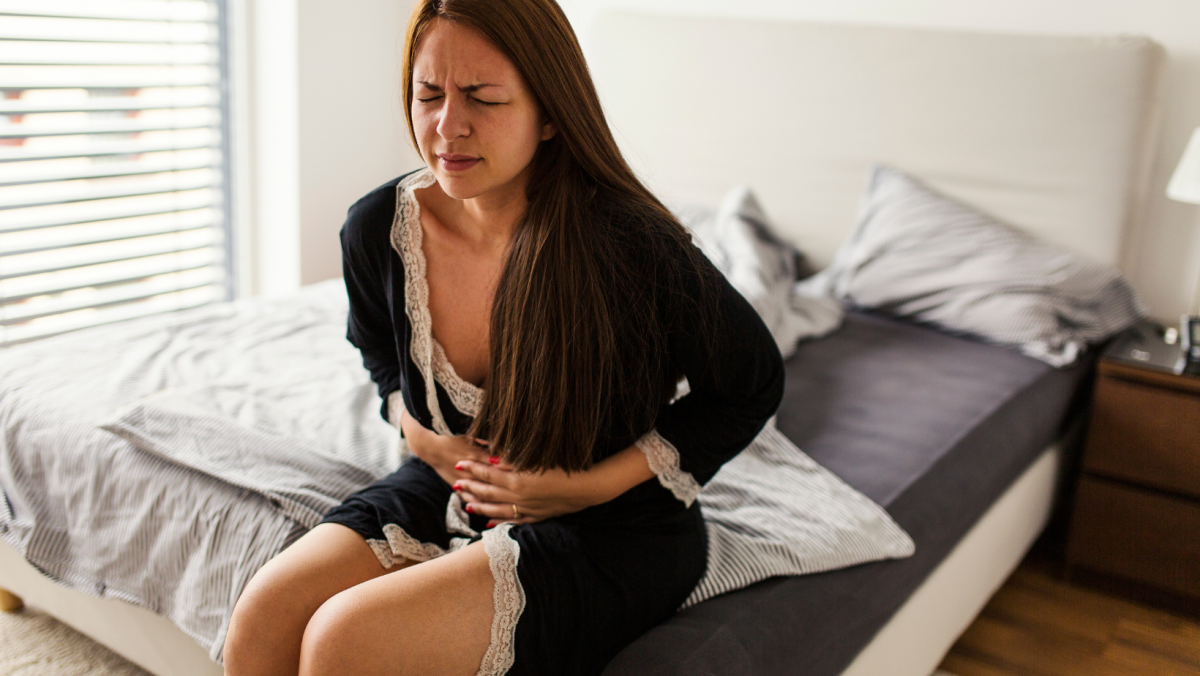
Cramping and Acute Fibroid Pain

If you are diagnosed with uterine fibroids and are experiencing cramping and acute fibroid pain, it could be due to fibroid degeneration.

What is fibroid degeneration, you ask?

Fibroid degeneration is a process that occurs when fibroids start to die off and break down.

And, why would this happen?

Fibroid degeneration is due to uterine fibroids being unable to get the steady supply of blood and nutrients that they need in order to survive. Degeneration is commonly seen in large fibroids as they need more blood than smaller fibroids.

As a result of not having enough blood and nutrients, fibroids will begin to degenerate, and thereby shrink down to a size that the current blood supply can support.

So it’s that a good thing? Don’t we want our fibroids to shrink?

Yes, however, when this happens, it is not permanent.

In fact, it is likely that the fibroid will re-grow and expand, and the whole process of growth and degeneration will begin again. And, with that, so will the experience of painful cramping and other symptoms such as:

Acute stabbing pain — This is perhaps the most common symptom of fibroid degeneration and includes localized sharp and stabbing pains in the abdomen. The stabbing pains are caused by a release of chemicals from the fibroids as the cells die and are accompanied by swelling.

Fever — As a result of fibroid degeneration, many women experience a low-grade fever, which is defined as a body temperature between 100.4 and 102.2 degrees Fahrenheit.

Bleeding — In rare cases, fibroid degeneration may cause hemorrhaging or bleeding. This can occur during your normal menstrual cycle or between periods and is a telltale sign of fibroids.

Chronic pain — Lasting pelvic pain and other chronic pain that isn’t too severe but never seems to go away is also a sign of fibroid degeneration.

The pain caused by uterine fibroid degeneration can last anywhere from just a few days to several weeks. Though some of the pain can be treated with over-the-counter pain medicine, these medications are not a permanent solution and can come with risks and complications of their own.

In our next article, we will take a further look at fibroid degeneration, and also dive into some of the treatment options available for those suffering from this type of pain.
 

Categories
Fibroids

Diagnosed with fibroids?

It is estimated that around 26 million women in the United States between the ages of 15 and 50 have uterine fibroids. And of these 26 million, roughly half will experience associated symptoms and health concerns. Fortunately for all, fibroids are treatable.

So what exactly is a fibroid?

Uterine fibroids are noncancerous growths of the uterus that often appear during a woman’s childbearing years. These growths are made of smooth muscle cells and fibrous connective tissue. Sometimes fibroids are solitary, but it is also common to have multiple ones.

Uterine fibroids range in size. Some are so tiny that they are undetectable by the human eye alone. While others can be large enough to distort and enlarge the uterus.

How can I tell if I have a fibroid?

When a woman has a fibroid, it is most often discovered during a routine pelvic exam or imaging procedures performed for other reasons. If the fibroid or fibroids do not cause any symptoms, pain, or discomfort, and are not affecting fertility- then they usually do not require treatment. However, when symptoms are present, these can be managed with medications, surgery, and by using minimally invasive techniques.

Some of the symptoms associated with fibroids are: • Unusually heavy period • Long than normal periods • Bleeding in between periods • Pressure and pain in the pelvis • Frequent urination • Lower back pain • Pain during intercourse • Difficulty conceiving

Though some women may need to have the fibroids surgically removed, more often than not, they can be eliminated using a technique known as Uterine Fibroid Embolization. This non-invasive process treats the fibroids by inserting a small catheter into the wrist, then by using x-ray technology, the catheter is guided into the blood vessels supplying the fibroids. Small gelatin beads are then released into the blood vessels, creating a blockage.

A blockage? Isn’t that dangerous?

No, in this case, it is not. Unlike a blockage to the heart or other vital organs, this particular blockage is only cutting off the blood supply to the fibroid. The results are remarkable, for, without the fibroids being able to receive vital nutrients through the blood, they can not survive.

Does this sound too good to be true?

It’s not. In fact, according to the New England Journal of Medicine, the success rate of uterine fibroid embolization is up to 95%.

The bottom line is, if you are diagnosed with having fibroids, it’s ok, and you are going to be just fine. You are not alone, and treatment is readily available. No one deserves to live with the physical discomfort associated with fibroids, so please do not hesitate to take action, and set up your appointment today.

For more information about fibroid diagnosis and treatment, or to schedule an appointment, please do not hesitate to call us at MidAtlantic Fibroid Care, at 301-622-5360.