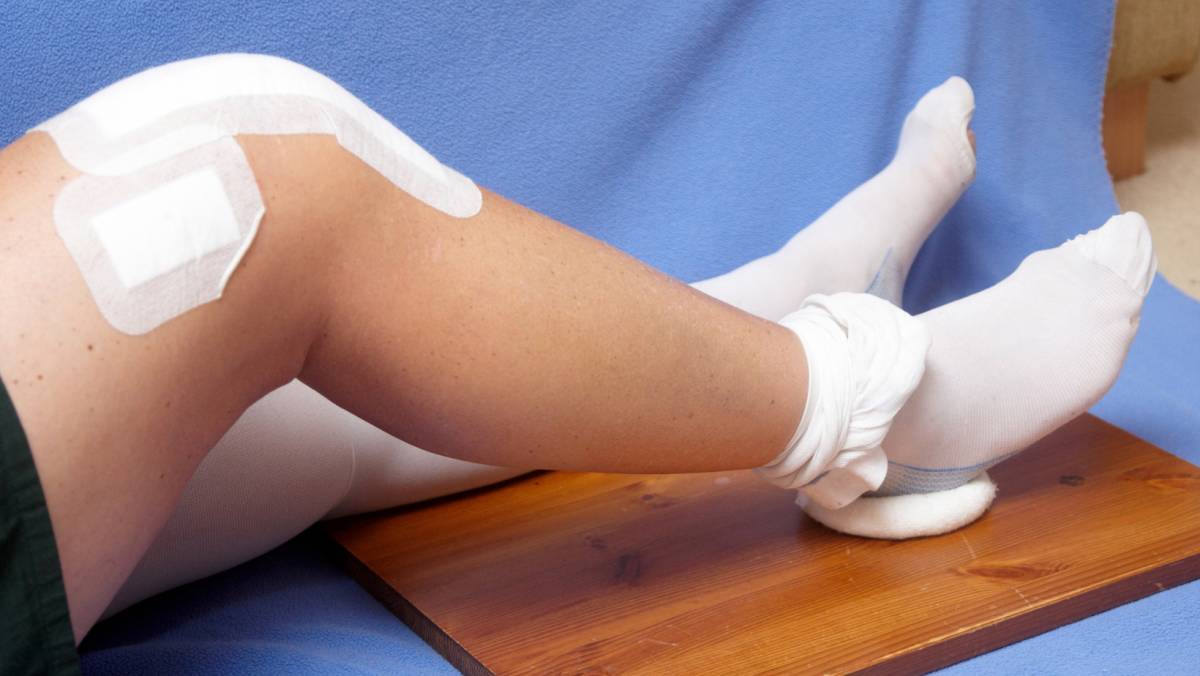

When left untreated, knee osteoarthritis can develop into a debilitating condition with a marked impact on a person’s overall health and quality of life.
For many years the gold standard for treating knee osteoarthritis has been a total knee arthroplasty, also known as a knee replacement surgery.
Though this surgery has a well-established track record with a positive outcome, it is not without its complications.
First of all, a knee replacement, which is a major surgery that involves replacing either the damaged part of or the entire joint with a prosthesis— has a long long recovery period. And, it’s not necessarily a good fit for everyone.
According to an article published in the Journal of Arthroplasty called “Why are total knee arthroplasties failing today—has anything changed after 10 years,” a fair number of patients with knee osteoarthritis are not good candidates for knee replacement surgery.
The study found that certain comorbidities, such as diabetes, obesity, coronary artery disease, malnutrition, renal disease, cirrhosis, and immunosuppression, are associated with increased medical and surgical complications when a knee replacement surgery is performed.
Studies have also found that the patient’s age is another factor to consider, due to the possibility that a knee replacement surgery performed on a young person, could increase their risk of aseptic loosening, and lead to several revision surgeries in the future.
Studies have also found that elderly patients are not always the best candidates for knee surgery, given the occurrence of age-related co-morbidities, and their increased risk of fractures.
Though knee osteoarthritis used to be considered a normal “wear-and-tear” disease brought on by years of stress on the knee and meniscal degeneration that comes with age, recent data has suggested it’s not that simple.
In fact, according to recent data published in The Journal of Rheumatology, entitled “Osteoarthritis, angiogenesis, and inflammation,” it is now understood that inflammation plays a role in not only the pain from knee osteoarthritis but also the progression of the disease itself.
So if inflammation is not only causing pain but driving the progression of knee osteoarthritis, can anything be done to stop it?
Fortunately, yes.
There is a treatment that can help alleviate these symptoms and potentially prevent further structural progression. That treatment is called Genicular Artery Embolization.
Genicular Artery Embolization is a minimally invasive outpatient procedure, in which the arteries that supply blood to the synovial lining of the knee are selectively catheterized.
Once the arteries are reached, tiny particles are injected through the catheter into these arteries where they reduce the blood supply, and in turn, reduce inflammation. The procedure typically takes one to two hours, and the patient can return home the same day.
Many people are experiencing the benefits of Genicular Artery Embolization, which can result in both immediate and long-term pain relief for patients with osteoarthritis.
GAE is an excellent choice for people who are not good candidates for knee replacement surgery due to certain comorbidities. It’s also a great choice for people who would like to postpone surgery, or who are too young for a knee replacement operation.
To learn more about Genicular Artery Embolization, and to find out if the procedure can benefit you, please call us today to set up your initial consultation.