
Categories
Knee Osteoarthritis

Refined Carbohydrates and Knee Pain

There is one thing that artificial sweeteners, processed meats, and processed carbohydrates all have in common, and it’s not good.

They’re delicious?

Maybe.

They can lead to weight gain?

Well, yes.

When consumed in excess they can lead to numerous health problems?

Yes.

But what about their effect specifically on those of us with knee osteoarthritis?

If you guessed “they increase inflammation,” then you are absolutely correct.

However, it isn’t just sugar, artificial sweeteners, and processed meats that can trigger an inflammatory response- which as a result can increase joint pain and stiffness. There is another common culprit that can be found just about anywhere and everywhere. And that culprit is refined carbohydrates.

It’s important to note that the keyword here is “refined” and not just carbohydrates in general. So before we jump into what exactly that means, let’s take a brief look at what a carbohydrate is.

Carbohydrates or “carbs” have been given a bad rap, and nearly every popular diet requires that they be eliminated entirely or at least severely reduced. However, carbs are not inherently bad.

In fact, carbohydrates are an important part of our diet as they help our bodies to function properly by serving as the primary fuel for our brains and our red blood cells. Therefore to try and cut them out entirely can lead to all sorts of problems including brain fog, bad breath, headache, weakness, and fatigue.

The healthiest carbs are those found in an unrefined and natural state. Sources of these good carbs include whole grains, beans, fruits, and vegetables, which are all excellent sources of fiber, vitamins, minerals, and phytonutrients. Oftentimes these types are carbohydrates are referred to as “whole” and “unprocessed.”

Refined carbohydrates are whole grains, where the fiber has been stripped away.

This means that when the grain is refined, the bran which is a good source of fiber and vitamins, and the germ which contains vitamins and minerals that provide a variety of health benefits, are stripped away. This process leaves only the starch in the middle of the grain, which is then used to create white flour.

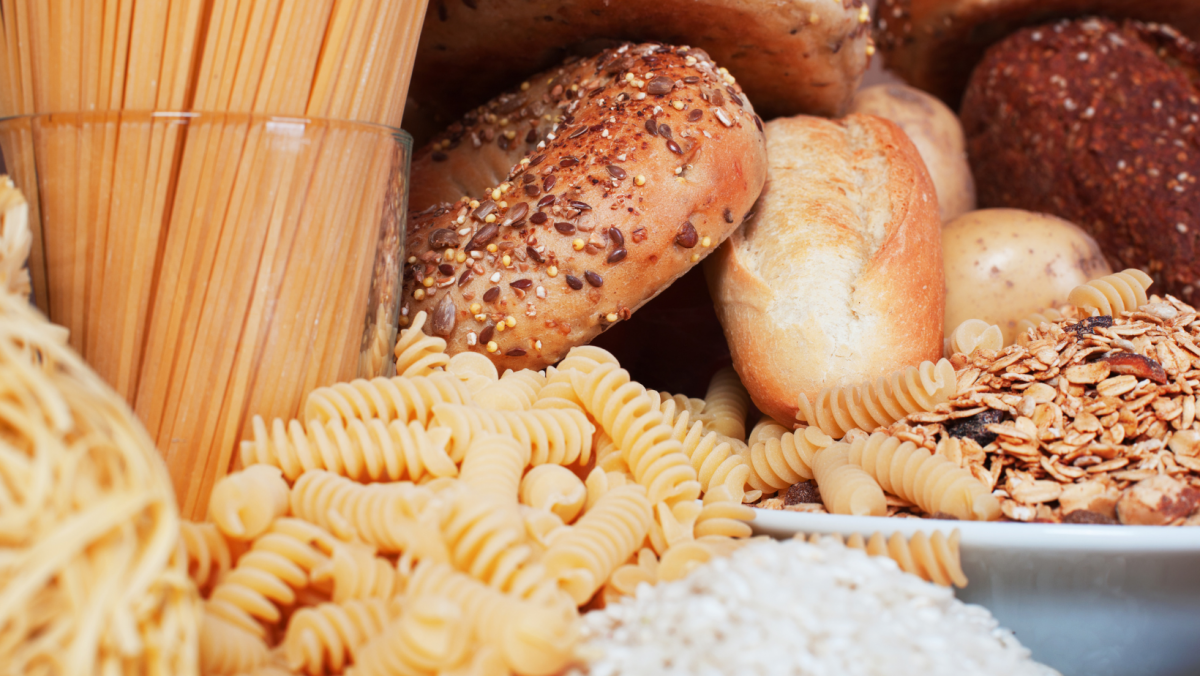
Common refined carbohydrates are white rice, white pasta, white bread, breakfast cereals, cookies, and more.

The problem with refined carbohydrates, other than their lack of vitamins, minerals, nutrients, and fiber- is that when they are ingested, the body turns them into sugar quickly. Then, as a result of this spike in blood sugar, the body responds as it would to regular sugar, and triggers an inflammatory response. Which is of particular concern for those of us with knee osteoarthritis.

Therefore, it’s important that the consumption of refined carbohydrates is greatly limited as they can not only worsen knee pain by triggering inflammation but can also lead to weight gain and other health problems.

That being said, given their abundance in a western diet, it’s hard to avoid refined carbohydrates entirely. However, they can be greatly limited.

One way to limit refined carbs and curb cravings for them is to replace them with healthier more nutritious carbs.

In our next article, we will take a look at some of these whole or unprocessed alternatives to refined carbohydrates, which can not only decrease inflammation but can even prevent it from happening in the first place.


Categories
Knee Osteoarthritis

Holiday Foods and Holiday…Knee Pain?

Holiday foods can be lovely and enjoyable, but for those of us suffering from knee pain caused by osteoarthritis, some of these holiday foods can be problematic.

In fact, many of these foods contain ingredients that can actually wreak havoc on our bodies, leading to increased inflammation, and as a result, increased stiffness and pain.

Though in a perfect world, the best thing to do would be to cut out these foods entirely, in reality, that usually doesn’t work.

In fact, not only does a restrictive diet create feelings of deprivation, but more often than not, this approach just leads to an episode of overeating.

But who wants to go to a holiday party and avoid all the sweet treats and seasonal foods?

Not only is it not enjoyable to do this, but being too restrictive can also cause moodiness and irritability, which isn’t quite the holiday spirit.

So let’s take a look at one of the biggest culprits for increased inflammation and pain, which is in abundance during the holidays. And, let’s look at a few solutions and suggestions on how to enjoy some of these foods while keeping inflammation at bay.


SUGAR

For many people, the worst food for inflammation is sugar- which is available in spades during the holiday season.

Sugar causes the body to release cytokines, which are chemicals that send messages to the body that trigger an inflammatory response.

But it’s not just the sugar in cookies and cakes that’s the problem,  it’s also the sugar that is jam-packed in soda and certain alcoholic beverages.

Overindulgence in sugary foods and beverages can leave the joints feeling stiffer, and the body feeling weaker and more fatigued the next day.

In fact, many people report that they experience something akin to a hangover after consuming sugary foods, even when no alcoholic beverages were consumed.

So what’s the solution then? Should we avoid sugar completely, or consume only artificial sweeteners?

Avoiding or limiting the number of sugary foods is the best solution, and so is- avoiding artificial sweeteners.

ARTIFICIAL SWEETENERS

When it comes to reducing inflammation cutting out or reducing our sugar intake is necessary, as is cutting out artificial sweeteners.

The problem with artificial sweeteners is that the chemicals they contain confuse the body and cause it to respond to this foreign substance by attacking it. As a result, this leads the body to have an inflammatory response, which results in the emergence of the painful symptoms that go along with that.

One of the biggest culprits when it comes to consuming artificial sweeteners is drinking diet soda.

Aspartame, which is made up of three chemicals- aspartic acid, phenylalanine, and methanol is found in many diet sodas, and is a recipe for disaster when it comes to increasing inflammation and knee pain.

In fact, most research shows that if you’re going to eat something sweet, you’re better off with something that contains actual sugar- although a natural sugar such as that found in fruit, would be a whole lot better- and believe it or not, it too can actually satisfy your sweet tooth.

But it’s not just sweet treats that need to be consumed in moderation. It’s also processed meats and refined carbohydrates– Yes, we’re talking about you ham, bacon, and sausage. And we’re talking about you- white bread, pasta, cakes, and pies.

In our next article, we will take a look at the impact that processed meats can have on knee osteoarthritis pain by way of increased inflammation. And, we will offer some suggestions to help you maintain that holiday spirit, without rigid restrictions and deprivation.

Categories
Knee Osteoarthritis

Inflammation: Destroyer or Healer?

What comes to mind when you hear the word “inflammation”?

A sore throat, lower back pain, joint pain, knee pain?

If you think of any of these, and countless others, you are right.
All of them are influenced by inflammation.

Though inflammation is a normal part of the human body’s defense system and can be beneficial when there is injury or infection, it can be damaging when it occurs in healthy tissue.

Inflammation can be especially harmful if it becomes chronic and lasts for too long.

In fact, chronic inflammation may persist for months or even years. And, in the case of inflammation in the knees by way of osteoarthritis, this inflammation can have a negative impact on not only your overall health but your quality of life as well.

For many years, knee osteoarthritis has been viewed as primarily a degenerative disease, one that is more often than not chalked up to the “wear and tear,” of aging and time.

However, over the past few decades, numerous studies have indicated that inflammation may play a more important role in the progression and severity of knee osteoarthritis.

According to a recent article called “Inflammatory Activity in Symptomatic Knee Osteoarthritis,” published in Arthritis & Rheumatology, inflammation can be triggered by factors like biomechanical stress.

Biomechanical stress is considered to be the internal and external forces that exert stress on the human body, which in this case, is the knees.

Examples of this type of stress on the knees include standing in one place for extended periods of time, reduced circulation and muscle fatigue, exposure to cold temperatures, contact stress or pressure, physical exertion, repetition, heavy lifting, and weight-related joint stress.

In the article, the authors stated that based on the findings of numerous research studies, biochemical stress has been proven to stimulate the release of early-stage inflammatory cytokines which in turn induces the activation of signaling pathways.

So what does that all mean?

It means, that as a result of biomechanical stress, more inflammatory molecules are generated. And, as a result, the anatomical and physiological functions of the joint are altered, and the incidence of knee osteoarthritis is greatly increased.

Though inflammation is one of the main contributing factors in the development and progression of knee osteoarthritis, it also must be said that while it can lead to tissue damage, it is also central to the repair process.

Current research is now seeking to understand the drivers and the regulation of knee inflammation.

The body’s natural wound-healing response manifests itself in the osteoarthritic joint, which has led to an increasing interest in how the immune response may influence disease progression.

Researchers are interested in determining if the body attempts to deploy the wound-healing cascade during osteoarthritis and could the disease be driven by a partial or even stalled repair process.

The bottom line is that inflammation most certainly plays a role when it comes to knee osteoarthritis, however exactly what that role is, remains to be studied further.

Research studies are being conducted at this time, to try and understand the cells and signals in both wound healing inflammation and the immune processes involved, in order to better understand the progression of osteoarthritis in the knees.

The hope is that by understanding these processes, potential therapeutic targets could be revealed in order to slow the rate of disease progression or enhance the inherent repair mechanisms.