Categories
Knee Osteoarthritis

Exercise and Maintaining a Healthy Weight

One of the most common goals of the new year is to exercise more and lose weight. This is a great goal, especially when it comes to dealing with the symptoms of knee osteoarthritis, as exercise and maintaining a healthy weight, can both decrease knee pain and increase knee mobility.

Those of us that already go to a gym, might notice an influx of people working out in January, as new years resolution-based memberships skyrocket.

We also might notice that this increase in people tapers off considerably as the weeks go by.

Why is this?

We know that by exercising and maintaining a healthy weight, we can experience significant health benefits such as improved circulation, increased feelings of wellness and well-being, and reduced knee and joint pain. Regular exercise can also dramatically reduce our risk for all sorts of other health problems.

So knowing all of this, why is it that so many well-intentioned people fail to achieve their exercise and weight loss goals?

According to James Clear, the author of the New York Times bestselling book Atomic Habits, one reason for this could be that they set unrealistic standards for themselves.

Clears writes that many well-intentioned workout regimens are just too hard to maintain day to day and week to week. Therefore, he writes that the better choice is to set small goals to make little changes that build over time.

And how does one make these little changes?

By building new habits.

So what is a habit?

According to James Clear, “Habits are the small decisions you make and the actions you perform every day.”

He goes on to say that “Your life today is essentially the sum of your habits. How in shape or out of shape you are? A result of your habits. How happy or unhappy you are? A result of your habits. How successful or unsuccessful you are? A result of your habits.”

So the key to changing these habits is by introducing some new ones.

In order to build a new habit, such as regular exercise, Clear’s recommendations are:

Start with an incredibly small habit.

The author states that one of the best ways to start building a new habit is to choose something that doesn’t take a lot of motivation to do.

For example, instead of saying “I’m going to do 50 sit-ups every day.” Try starting with five.

Increase your habit in very small ways.

In Atomic Habits, Clear writes that it’s important to start small at a new task or activity, and then gradually improve.

He recommends that we aim to increase a new habit by merely one percent every day.

As a result of doing this, Clear has found that motivation and willpower are given time to grow, therefore making it easier to practice the new habit.

In our next article, we will continue looking at research-based recommendations for building an exercise habit in order to decrease knee pain, and increase function.

Categories
Knee Osteoarthritis

Refined Carbohydrates and Knee Pain

There is one thing that artificial sweeteners, processed meats, and processed carbohydrates all have in common, and it’s not good.

They’re delicious?

Maybe.

They can lead to weight gain?

Well, yes.

When consumed in excess they can lead to numerous health problems?

Yes.

But what about their effect specifically on those of us with knee osteoarthritis?

If you guessed “they increase inflammation,” then you are absolutely correct.

However, it isn’t just sugar, artificial sweeteners, and processed meats that can trigger an inflammatory response- which as a result can increase joint pain and stiffness. There is another common culprit that can be found just about anywhere and everywhere. And that culprit is refined carbohydrates.

It’s important to note that the keyword here is “refined” and not just carbohydrates in general. So before we jump into what exactly that means, let’s take a brief look at what a carbohydrate is.

Carbohydrates or “carbs” have been given a bad rap, and nearly every popular diet requires that they be eliminated entirely or at least severely reduced. However, carbs are not inherently bad.

In fact, carbohydrates are an important part of our diet as they help our bodies to function properly by serving as the primary fuel for our brains and our red blood cells. Therefore to try and cut them out entirely can lead to all sorts of problems including brain fog, bad breath, headache, weakness, and fatigue.

The healthiest carbs are those found in an unrefined and natural state. Sources of these good carbs include whole grains, beans, fruits, and vegetables, which are all excellent sources of fiber, vitamins, minerals, and phytonutrients. Oftentimes these types are carbohydrates are referred to as “whole” and “unprocessed.”

Refined carbohydrates are whole grains, where the fiber has been stripped away.

This means that when the grain is refined, the bran which is a good source of fiber and vitamins, and the germ which contains vitamins and minerals that provide a variety of health benefits, are stripped away. This process leaves only the starch in the middle of the grain, which is then used to create white flour.

Common refined carbohydrates are white rice, white pasta, white bread, breakfast cereals, cookies, and more.

The problem with refined carbohydrates, other than their lack of vitamins, minerals, nutrients, and fiber- is that when they are ingested, the body turns them into sugar quickly. Then, as a result of this spike in blood sugar, the body responds as it would to regular sugar, and triggers an inflammatory response. Which is of particular concern for those of us with knee osteoarthritis.

Therefore, it’s important that the consumption of refined carbohydrates is greatly limited as they can not only worsen knee pain by triggering inflammation but can also lead to weight gain and other health problems.

That being said, given their abundance in a western diet, it’s hard to avoid refined carbohydrates entirely. However, they can be greatly limited.

One way to limit refined carbs and curb cravings for them is to replace them with healthier more nutritious carbs.

In our next article, we will take a look at some of these whole or unprocessed alternatives to refined carbohydrates, which can not only decrease inflammation but can even prevent it from happening in the first place.

Categories
Knee Osteoarthritis

Ham, Bacon, and Inflammation

For those of us with knee osteoarthritis, the momentary enjoyment of consuming processed foods can be followed by increased inflammation and as a result, increased knee pain.

Cutting back on the many desserts available during holiday parties, and the many sugary beverages or artificially sweetened sodas that accompany them can certainly help keep inflammation at bay. However, it isn’t just sugar that’s the problem.

So what’s another type of food that contributes to increased inflammation?

PROCESSED MEATS

Yes, that’s right.

We are talking about that honey-baked ham, pan-fried bacon, and saturated fat’s good old friend, sausage.

All of which are holiday and winter favorites. And, all of these are processed meats that can contribute to inflammation.

Processed meats contribute to inflammation by producing nitrous compounds which are associated with an increased risk of inflammation-related pain, but also of chronic diseases such as cancer.

Though sometimes it can be challenging to avoid these foods entirely, especially in the case of a dinner party or get-together where you have little control over the food- it is always possible to reduce your intake of them.

One way to do so is to add more salad and vegetables to your plate.

In fact, studies have shown that eating a salad before a meal can result in fewer calories consumed during the meal while providing extra nutrients that can decrease the body’s response to any inflammatory foods that are consumed.

Unfortunately, it is not uncommon for a food spread at a dinner party or event to contain everything but vegetables. However, there is a solution:

Offer to bring the salad yourself.

It’s that simple.

By offering to bring a salad, you can not only contribute to the event, but you can also contribute to having a healthier diet for yourself and others.

In fact, anytime you bring a salad to a party or event, you may be surprised by how many people appreciate your healthy and delicious contribution.

In our next article, we will take a look at another group of foods that can contribute to inflammation and that can be found everywhere, especially during the colder months: Refined Carbohydrates.


Categories
Knee Osteoarthritis

Holiday Foods and Holiday…Knee Pain?

Holiday foods can be lovely and enjoyable, but for those of us suffering from knee pain caused by osteoarthritis, some of these holiday foods can be problematic.

In fact, many of these foods contain ingredients that can actually wreak havoc on our bodies, leading to increased inflammation, and as a result, increased stiffness and pain.

Though in a perfect world, the best thing to do would be to cut out these foods entirely, in reality, that usually doesn’t work.

In fact, not only does a restrictive diet create feelings of deprivation, but more often than not, this approach just leads to an episode of overeating.

But who wants to go to a holiday party and avoid all the sweet treats and seasonal foods?

Not only is it not enjoyable to do this, but being too restrictive can also cause moodiness and irritability, which isn’t quite the holiday spirit.

So let’s take a look at one of the biggest culprits for increased inflammation and pain, which is in abundance during the holidays. And, let’s look at a few solutions and suggestions on how to enjoy some of these foods while keeping inflammation at bay.


SUGAR

For many people, the worst food for inflammation is sugar- which is available in spades during the holiday season.

Sugar causes the body to release cytokines, which are chemicals that send messages to the body that trigger an inflammatory response.

But it’s not just the sugar in cookies and cakes that’s the problem,  it’s also the sugar that is jam-packed in soda and certain alcoholic beverages.

Overindulgence in sugary foods and beverages can leave the joints feeling stiffer, and the body feeling weaker and more fatigued the next day.

In fact, many people report that they experience something akin to a hangover after consuming sugary foods, even when no alcoholic beverages were consumed.

So what’s the solution then? Should we avoid sugar completely, or consume only artificial sweeteners?

Avoiding or limiting the number of sugary foods is the best solution, and so is- avoiding artificial sweeteners.

ARTIFICIAL SWEETENERS

When it comes to reducing inflammation cutting out or reducing our sugar intake is necessary, as is cutting out artificial sweeteners.

The problem with artificial sweeteners is that the chemicals they contain confuse the body and cause it to respond to this foreign substance by attacking it. As a result, this leads the body to have an inflammatory response, which results in the emergence of the painful symptoms that go along with that.

One of the biggest culprits when it comes to consuming artificial sweeteners is drinking diet soda.

Aspartame, which is made up of three chemicals- aspartic acid, phenylalanine, and methanol is found in many diet sodas, and is a recipe for disaster when it comes to increasing inflammation and knee pain.

In fact, most research shows that if you’re going to eat something sweet, you’re better off with something that contains actual sugar- although a natural sugar such as that found in fruit, would be a whole lot better- and believe it or not, it too can actually satisfy your sweet tooth.

But it’s not just sweet treats that need to be consumed in moderation. It’s also processed meats and refined carbohydrates– Yes, we’re talking about you ham, bacon, and sausage. And we’re talking about you- white bread, pasta, cakes, and pies.

In our next article, we will take a look at the impact that processed meats can have on knee osteoarthritis pain by way of increased inflammation. And, we will offer some suggestions to help you maintain that holiday spirit, without rigid restrictions and deprivation.

Categories
Knee Osteoarthritis

Inflammation: Destroyer or Healer?

What comes to mind when you hear the word “inflammation”?

A sore throat, lower back pain, joint pain, knee pain?

If you think of any of these, and countless others, you are right.
All of them are influenced by inflammation.

Though inflammation is a normal part of the human body’s defense system and can be beneficial when there is injury or infection, it can be damaging when it occurs in healthy tissue.

Inflammation can be especially harmful if it becomes chronic and lasts for too long.

In fact, chronic inflammation may persist for months or even years. And, in the case of inflammation in the knees by way of osteoarthritis, this inflammation can have a negative impact on not only your overall health but your quality of life as well.

For many years, knee osteoarthritis has been viewed as primarily a degenerative disease, one that is more often than not chalked up to the “wear and tear,” of aging and time.

However, over the past few decades, numerous studies have indicated that inflammation may play a more important role in the progression and severity of knee osteoarthritis.

According to a recent article called “Inflammatory Activity in Symptomatic Knee Osteoarthritis,” published in Arthritis & Rheumatology, inflammation can be triggered by factors like biomechanical stress.

Biomechanical stress is considered to be the internal and external forces that exert stress on the human body, which in this case, is the knees.

Examples of this type of stress on the knees include standing in one place for extended periods of time, reduced circulation and muscle fatigue, exposure to cold temperatures, contact stress or pressure, physical exertion, repetition, heavy lifting, and weight-related joint stress.

In the article, the authors stated that based on the findings of numerous research studies, biochemical stress has been proven to stimulate the release of early-stage inflammatory cytokines which in turn induces the activation of signaling pathways.

So what does that all mean?

It means, that as a result of biomechanical stress, more inflammatory molecules are generated. And, as a result, the anatomical and physiological functions of the joint are altered, and the incidence of knee osteoarthritis is greatly increased.

Though inflammation is one of the main contributing factors in the development and progression of knee osteoarthritis, it also must be said that while it can lead to tissue damage, it is also central to the repair process.

Current research is now seeking to understand the drivers and the regulation of knee inflammation.

The body’s natural wound-healing response manifests itself in the osteoarthritic joint, which has led to an increasing interest in how the immune response may influence disease progression.

Researchers are interested in determining if the body attempts to deploy the wound-healing cascade during osteoarthritis and could the disease be driven by a partial or even stalled repair process.

The bottom line is that inflammation most certainly plays a role when it comes to knee osteoarthritis, however exactly what that role is, remains to be studied further.

Research studies are being conducted at this time, to try and understand the cells and signals in both wound healing inflammation and the immune processes involved, in order to better understand the progression of osteoarthritis in the knees.

The hope is that by understanding these processes, potential therapeutic targets could be revealed in order to slow the rate of disease progression or enhance the inherent repair mechanisms.

Categories
Knee Osteoarthritis

Knee Pain, Even at Rest?

The pain of osteoarthritis in the knees can be felt when standing up, walking, or doing any other movement. Which makes sense.

However, did you know that many people with knee osteoarthritis experience pain even when they are at rest?

In order to decrease this pain, many turn to over-the-counter NSAIDs, prescription medications, knee injections, and physical therapy. Then if none of those work, the next step is usually knee replacement surgery, however, this is changing as more and more people are opting to treat their condition with Genicular Artery Embolization.

Genicular artery embolization is a procedure that can treat knee osteoarthritis by blocking the blood flow to the inflamed areas of the knee that are causing decreased mobility and pain.

The outpatient procedure is performed by way of a tiny catheter which is inserted into the blood vessels and then guided by a highly skilled interventional radiologist, to the artery that supplies blood to the areas of knee pain.

The interventional radiologist then releases microscopic spheres into the specific blood vessel (genicular artery) to block this flow.

As a result of this blockage, inflammation is greatly decreased and so is knee pain.

Unlike knee replacement surgery which requires recovery time in the hospital, patients who undergo GAE treatment can go home the same day.

In most cases, pain relief begins to occur within two weeks, as the inflammation in the knee joint is reduced, thereby relieving the knee pain associated with osteoarthritis.

In fact, according to a study published in The Journal of Vascular and Interventional Radiology, knee pain has been shown again and again to be significantly reduced as a result of genicular artery embolization- particularly for those dealing with moderate-to-severe knee pain.

This particular study found that its participants showed continued improvement in their knee osteoarthritis symptoms at one-month, three-months, and at their six-month checkups. Not only did their symptoms improve, but the MRI scans taken at this point of recovery, proved it.

The Journal of Vascular and Interventional Radiology also published the results of a study that followed ten patients through their GAE journey, pre and post-procedure.

At the one-year mark, the participants reported:

Median pain: 15.4% improvement
Knee/leg function: 21.3% improvement
Quality of life: 100% improvement

This study also conducted follow-up tests with the participants that included a six-minute walk and a 30-second chair sitting/standing test. As a result of the GAE procedure scores for these tests improved by 26% and 43% respectively.

Add to that, the fact that in both studies no adverse reactions were reported, and you have yourself an excellent option for treating knee osteoarthritis.

To learn more about GAE, and to see if this procedure could benefit you and relieve your osteoarthritis knee pain, please call and set up a consultation today.

Categories
Knee Osteoarthritis

Hyaluronic Acid Injection for Osteoarthritis

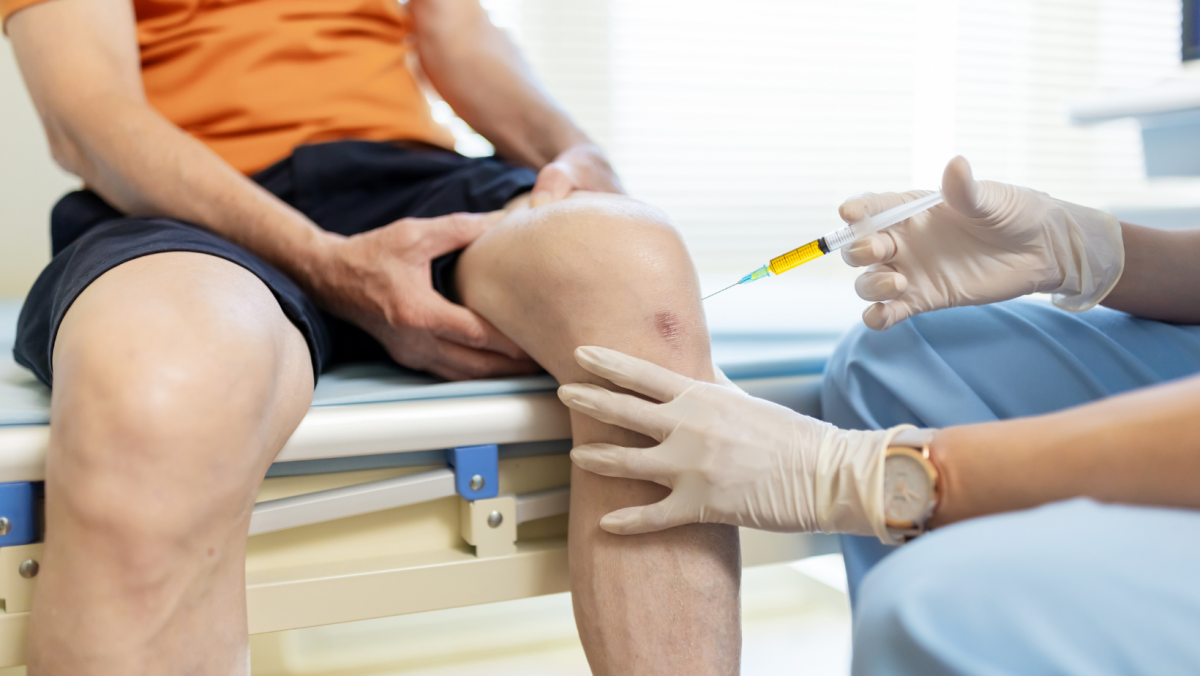
Another type of knee injection that is used to temporarily reduce knee pain, is a Hyaluronic Acid Injection, also known as viscosupplementation.

Hyaluronic acid is a gel-like substance that occurs naturally in the body as part of the synovial lining that coats the joints. Hyaluronic acid is also present in other areas of the body such as the skin and eyes, where it helps retain moisture and keep these areas lubricated.

When it comes to relieving osteoarthritis knee pain, hyaluronic acid can be injected into the knee to help provide cushioning and lubrication.

The injection of this lubricating fluid into the knee joint can sometimes result in temporary lubrication that may help to decrease knee pain and inflammation, as well as improve knee function.

However, unfortunately, just like with corticosteroid knee injections, the relief experienced as a result of hyaluronic acid injections is temporary.

That being said, though hyaluronic injections are temporary solutions, and will not cure knee conditions, they can be effective at relieving knee pain, in some cases, for up to six months.

The process of getting a hyaluronic knee injection is done through what is known as an intra-articular injection. This injection is usually administered by a nurse or trained healthcare professional, who should first check to make sure that this type of injection is suitable for you.

Typically hyaluronic knee injections are between one and five injections, usually a week apart depending on the brand of hyaluronic acid your healthcare professional uses.

The recovery period, post-injection typically involves avoiding jogging, high-impact sports, or being overly active for at least a few days following the injections. It is also recommended to avoid carrying heavy items or standing for long periods post injections.

For some, hyaluronic injections can provide immediate relief. While for others, it can take several weeks for the inflammation and pain to subside.

In fact, several clinical studies have investigated the effectiveness of hyaluronic acid injections in treating knee osteoarthritis. And one of their findings was that the average time it takes to experience pain relief is around 4 weeks post-injection.

Studies have also found that the duration of relief periods can vary from 2 months to up to 6 months. With the most effective period, on average, being between weeks 5 and 13.

It’s important to note that not all studies conducted to test the effectiveness of hyaluronic acid injections in treating knee osteoarthritis have reported positive results. For this reason, some doctors may not recommend this treatment. Research also shows that these injections may not work in overweight people due to the narrowing of joint space in the knee.

More recently, other types of injections are emerging, though they are still in the experimental stage, and are not FDA-approved at this time. These include using platelet-rich plasma or stem cells to help relieve pain and potentially encourage the healing of damaged soft tissues. Some people have found that these injections can provide long-term relief and help them to remain active, but they may not be suitable for all.

The bottom line when it comes to hyaluronic knee injections is that they do not treat osteoarthritis or the knees themselves. However, they can provide temporary relief.

This temporary relief can be best put to use by using it as a time to begin physical therapy and exercises to help strengthen the muscles that support the knee. It’s also a potential treatment to help relieve the pain in the weeks leading up to surgery or genicular artery embolization, which will provide long-term pain relief.

In our next article, we will take a look at some of the side effects and risks associated with corticosteroid and hyaluronic acid injections. As well as dive deeper into what the research says about these temporary solutions to osteoarthritis knee pain.

Categories
Knee Osteoarthritis

Knee Injections: Do They Work?

Knee osteoarthritis is painful and can cause a decrease in mobility that puts limits on what you can do. Therefore many people turn to knee injections to help relieve this pain.

So what are knee injections? And do they work?

When physical therapy and pain medication taken by mouth fail to relieve the aching pain caused by osteoarthritis of the knee, sometimes doctors will recommend an injection of medicine directly into the arthritic joint. These injections of medicine can reduce inflammation and relieve pain.

The most common type of knee injections are corticosteroid injections and hyaluronic acid injections. Let’s take a look at what these medicines are and how they work, starting with corticosteroid injections.

Corticosteroids are synthetic drugs that closely resemble cortisol- which is a hormone that is naturally produced by the adrenal glands and regulated by the pituitary gland inside the brain.

Cortisol is essential for life, as it helps to maintain blood pressure, immune function, and the body’s anti-inflammatory processes.

Cortisol can also:

–  help the body manage stress

–  convert protein into glucose to boost flagging blood sugar levels

–  work in tandem with the hormone insulin to maintain constant

–  blood sugar levels

–  reduce inflammation

–  contribute to the maintenance of constant blood pressure

–  contribute to the workings of the immune system.

Corticosteroid is a synthetic cortisol that is also used to help relieve knee pain by treating inflammation that is responsible for swelling and pain. Once injected into the knee, corticosteroids work quickly to temporarily relieve knee osteoarthritis pain.

The temporary pain relief from a corticosteroid injection can be helpful if a person with knee pain needs to engage in physical therapy, attend to an important life event, or postpone knee replacement surgery or genicular artery embolization to a later, more convenient time.

That being said, the key word here is temporary.

Though these injections can be helpful, they do not treat the knee condition itself, but rather provide short-term, temporary relief. Relief, that over time, will wear off completely.

It’s also important to note that just like any medication-related treatment, corticosteroid injections do not work for everyone. And, even when they are effective, the results may vary.

Some studies show that on average, just 40% of patients feel better after receiving cortisone shots for knee osteoarthritis.

In one study, one month after undergoing treatment, people who received cortisone injections were asked to report and rank their improvements on a 10-point scale, with 1 being the least improvement and 10 being the most improvement.

The average score that the participants ranked their improvement in symptoms was a 5 out of 10.

So yes, the injection helped, but only slightly.

The Bottom Line: Corticosteroid injections can be helpful for short-term knee pain relief leading up to a long-term solution treatment such as surgery or genicular artery embolization. However, these injections are not without their own set of side effects and risks.

In our next article, we will take a look at the use and efficacy of hyaluronic acid injections. As well as dive deeper into what the research says about these temporary solutions to osteoarthritis knee pain.

Categories
Knee Osteoarthritis

Prescription Painkillers for Knee Pain

The first line of medication treatment to reduce knee pain is usually NSAIDs, however, sometimes opioids are used. But are they worth their risk?

As we covered in previous articles, NSAIDs stand for Nonsteroidal anti-inflammatory drugs and are used to treat inflammation, pain, and swelling. These medicines can be bought at the drugstore, grocery store, and even at one of your local gas stations.

They are common, they are everywhere, and they are helpful.

However, though NSAIDs are effective, they can be problematic when taken for long periods of time or at high doses. Higher doses and time spent taking these medications can increase the risk of gastrointestinal bleeding, and ulcers, and even lend themselves to cardiovascular problems. NSAIDs can also cause fluid retention and kidney problems.

For people with knee osteoarthritis who can not achieve adequate pain relief from over-the-counter medicines, or can not take them for other reasons, sometimes the prescription drug tramadol is used.

Tramadol, which is sold under the brand names Ultram®, Ultracet, and Ultram® ER (extended-release), among others, is an opioid pain medicine that is sometimes used to treat moderate to moderately severe pain. Belonging to a class of opiate analgesics, tramadol is a narcotic that works by changing the way the brain and the nervous system respond to pain.

When it comes to relieving acute pain, prescription painkillers are sometimes used because they can relieve acute pain very effectively. The most common of these are morphine, codeine, and oxycodone, among several others- and they are primarily used in emergency and intensive care situations to induce anesthesia or reduce severe pain.

Though prescription painkillers like tramadol are sometimes used to treat osteoarthritis knee pain, recent studies have shown evidence that they don’t necessarily work better than NSAIDs do. Not only that but opioids like tramadol have been shown to lose their effectiveness with time.

Recently, The Cochrane Review shared the results of some extensive research regarding the benefits and harms of tramadol for treating osteoarthritis. They examined 22 studies involving 3871 people taking tramadol and 2625 people in a comparator group.

What they found overall, was that compared with a placebo, the evidence showed that taking tramadol for up to three months had no important benefit on pain or function. They also found that many people in the tramadol group experienced side effects that led them to stop taking it, such as nausea, vomiting, dizziness, constipation, tiredness, and headache.

Other studies have found that tramadol can be effective at relieving osteoarthritis pain in elderly sufferers, but, only when it is combined with acetaminophen ( Tylenol).

This makes one wonder if it’s the tramadol or the Tylenol that’s making the difference. In fact, a recent meta-analysis comparing NSAIDs and opioids for relief of knee osteoarthritis pain in over 5,500 patients found that on average, oral NSAIDs, less potent oral opioids (such as tramadol), and more potent oral opioids (such as oxycodone) all had similar efficacy and each reduced pain by about 30 percent.

There are also some studies that present evidence to support the claim that using opioids, such as tramadol to relieve osteoarthritis pain can actually make the condition worse. The problem is believed to be caused by the fact that opioids alter the perception of pain, but they do not do anything to help improve the symptoms of osteoarthritis.

Unlike NSAIDs, Tramadol doesn’t reduce inflammation and swelling, and it comes with its own set of side effects, ranging from nausea, vomiting, and dizziness, to addiction and even death.

Fortunately, most people do not need to take opioids for knee osteoarthritis, and most doctors will err on the side of caution when it comes to prescribing them. Though opioids, like tramadol, can be helpful in the short-term treatment of severe pain, in order to bridge the gap until a knee surgery or procedure can be performed- other than that, most find they are better off using NSAIDs for pain relief.

For those that wish to avoid taking medications as much as possible or who wish to focus on treating knee osteoarthritis directly, there are many other options. Not only can physical therapy and diet and lifestyle changes make a difference, but so can an invasive surgery such as a knee replacement, or a non-invasive procedure called Genticular Artery Embolization, which we specialize in here at MidAtlantic Vascular and Interventional.

The Bottom Line: Sometimes due to an inability to take NSAIDs due to gastrointestinal problems, cardiovascular risks, and kidney problems, a prescription opioid such as tramadol could be prescribed. However, even in these cases, the risks and potential problems that can come from using opioids may outweigh the benefits.

Categories
Knee Osteoarthritis

Enjoying the Fall, Pain Free

Though we can not control fluctuating temperatures during the changing of the seasons, we can take action to lessen the impact it can have on our bodies.

In our last article, we took a look at 5 simple ways to decrease weather-related knee pain, which were:

  • Turn up the heat and keep those joints warm by keeping your home warm.
  • Wear warm clothing to keep your body warm, especially when going outdoors, be sure to layer up.
  • Take warm showers and baths to help boost circulation and soothe achy joints.
  • Exercise even though it’s tempting to cuddle up under a warm blanket all day, by moving your joints, will help decrease joint pain, and make you feel better all around. If it’s too cold out, try walking on the treadmill, or swimming in an indoor pool.
  • Stretch those joints with some yoga, and light stretching. Even stretching for just 10 minutes is enough to make a positive impact.

All of these recommendations are effective and 100% doable, but it gets even better than that…because…there’s more!

Here are five more easy solutions to decreasing weather-related joint pain, so that you can enjoy the fall and all the joy and activities that can come with it.

1. Hydrate

Hydrate, hydrate, hydrate. Our muscles and bones are composed of a high percentage of water, and keeping them hydrated is crucial to the health and function of our bodies. If the weather is cold, try adding a few cups of tea to your daily water intake. Not only will this aid in hydration but it can also help warm up the body, which on a chilly day is definitely a win-win.


2. Non-Steroidal Anti-Inflammatory Drugs (NSAIDs)

Depending on the severity and frequency of pain, you may wish to speak with your doctor about taking anti-inflammatory NSAIDs, like ibuprofen, on days when the fluctuating temperature is aggravating your joints. NSAIDs can be very helpful at reducing pain and inflammation in the short term, however, they can interact with many other medications, so it’s important to speak with your doctor or pharmacist first.


3. Get Enough Sleep

Being sure that you are getting enough sleep is important for overall health, regardless of the changing weather. However, this may mean that you’ll need to make some adjustments to your sleep routine due to the days getting shorter, and thereby getting darker, earlier.


4. Eat Healthy Nutritious Food

This one may be obvious in its benefits for overall health including knee health- however, its benefits can be particularly helpful for those of us that are sensitive to weather fluctuations. Eating a diet that is high in anti-inflammatory foods, like those found in the Mediterranean Diet, can help keep inflammation low and reduce joint pain, regardless of the weather.


5. Stay Positive

Staying positive doesn’t mean that you should ignore your knee pain, but it does mean that you can change your attitude about it.

When the body hurts, it’s trying to communicate with us. This is valuable information that we can be grateful for. This information could mean we need an extra layer or two, or maybe we need to rest more, eat better, call a friend, take a walk, watch a movie, and just plain take good care of ourselves. And when it comes to weather-related knee pain, stay positive by reminding yourself that this too shall pass.

The Bottom Line: No matter how your body responds to the ever-changing weather, there is always something you can do to help ease any pain and discomfort. That being said, if your joint pain is persistent and interfering with your life, it should definitely be addressed by speaking with your doctor, and seeing if any further treatment may be necessary

Fortunately, there are many excellent treatment options to reduce joint part, and in particular knee pain caused by osteoarthritis. One of the best treatment options is a procedure that we specialize in here at MidAtlantic Vascular and Interventional called Genicular Artery Embolization. To learn more about this procedure give us a call today.

In the meantime, as the weather changes from summer to fall, get out the sweaters, and the blankets, and make your favorite cup of tea. Then get ready to cuddle up with a good book, a movie, or a long chat with a friend, while you enjoy the relief that comes from keeping those knee joints warm and cozy.